
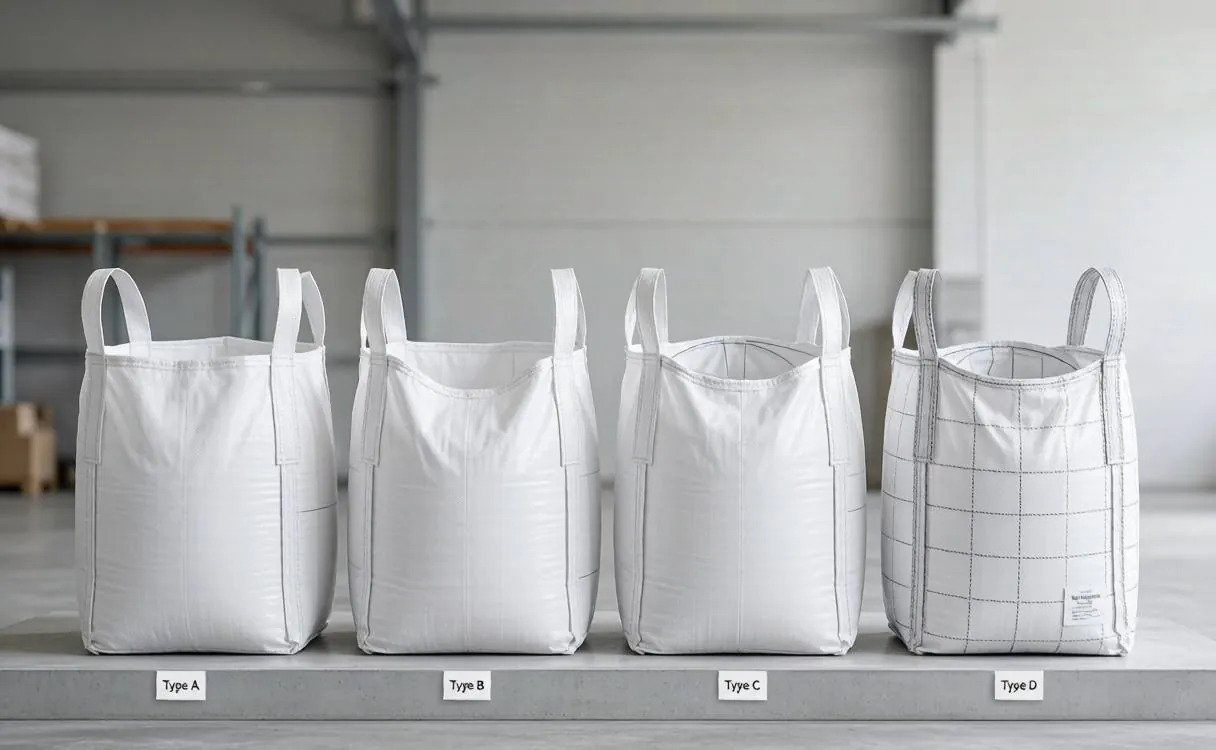
Flexible Intermediate Bulk Containers (FIBCs) are grouped into four construction types — A, B, C and D — defined by how they manage electrostatic discharge. Choosing the wrong type can turn a routine fill or discharge into a serious safety incident. This guide explains what each type is built for.
Type A — Standard, non-conductive
Type A bags are made from plain woven polypropylene with no special electrostatic protection. They are suitable for non-flammable products and environments where there is no fire or dust-explosion risk. They are the most economical option for dry, inert materials such as sand, cement or plastic pellets.
Type B — Low breakdown voltage
Type B bags also have no grounding mechanism, but their fabric is designed so that the voltage of any incendiary spark cannot exceed a safe threshold. They protect against propagating brushes but must not be used where flammable solvents or gasses are present.
Type C — Conductive (grounded)
Type C FIBCs incorporate conductive threads that must be connected to a verified ground during filling and emptying. They safely dissipate static in flammable-dust or vapour environments — provided the grounding chain is never broken. A single unseated connection defeats the protection.
Type D — Anti-static without grounding
Type D bags use special static-dissipative fibres to safely neutralise charges without requiring a ground connection. They are ideal for sites where grounding discipline cannot be guaranteed, but they must be kept clean and replaced if coated in conductive dust.
Making the call
Map your product's flammability, the surrounding atmosphere and your site's grounding reliability. When in doubt for hazardous goods, UN-certified Type C or D is the safe default. Our technical team can review your application and recommend the exact specification.