If you ship hazardous solids, powders or pastes in bulk, the UN certification marking on your FIBC is not optional decoration — it is a legal passport for cross-border transport. Here is what the codes tell you.
The marking, decoded
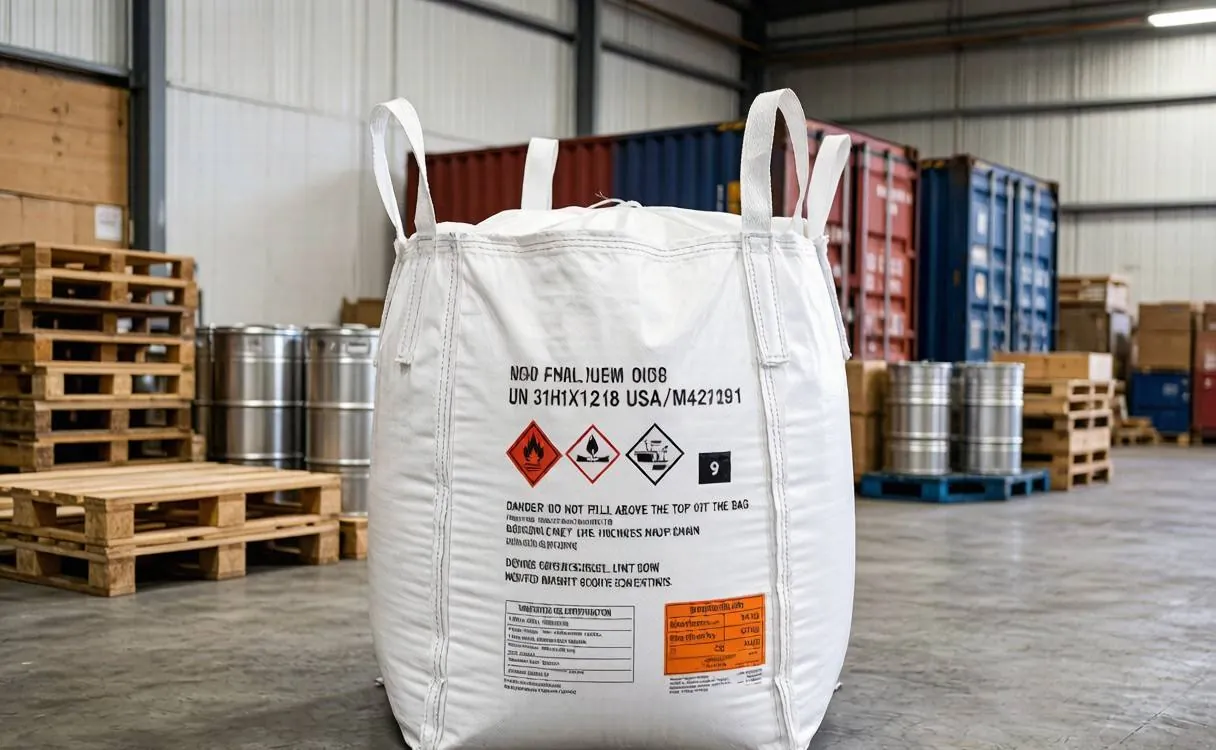
A typical UN mark reads something like 13H4/Y/900/24/CHN/1234. Each segment is meaningful: the packaging type (13H4 = woven plastic, flexible), the packing group (X/Y/Z), the maximum gross mass, the year of manufacture, the country and the manufacturer's code.
Why it matters
Carriers and customs authorities use this marking to confirm the bag is rated for the dangerous goods inside. A missing or mismatched mark can lead to rejected shipments, fines or, worse, an incident in transit. Our UN-certified FIBCs are tested to the relevant ADR, IMDG and IATA requirements.
Keeping certification valid
- Use only the rated Safe Working Load and safety factor (typically 5:1 or 6:1).
- Never repair a damaged UN bag for hazardous use.
- Retain the test report and batch traceability for audits.
Talk to our team before launch so we can match the correct UN specification to your product and mode of transport.