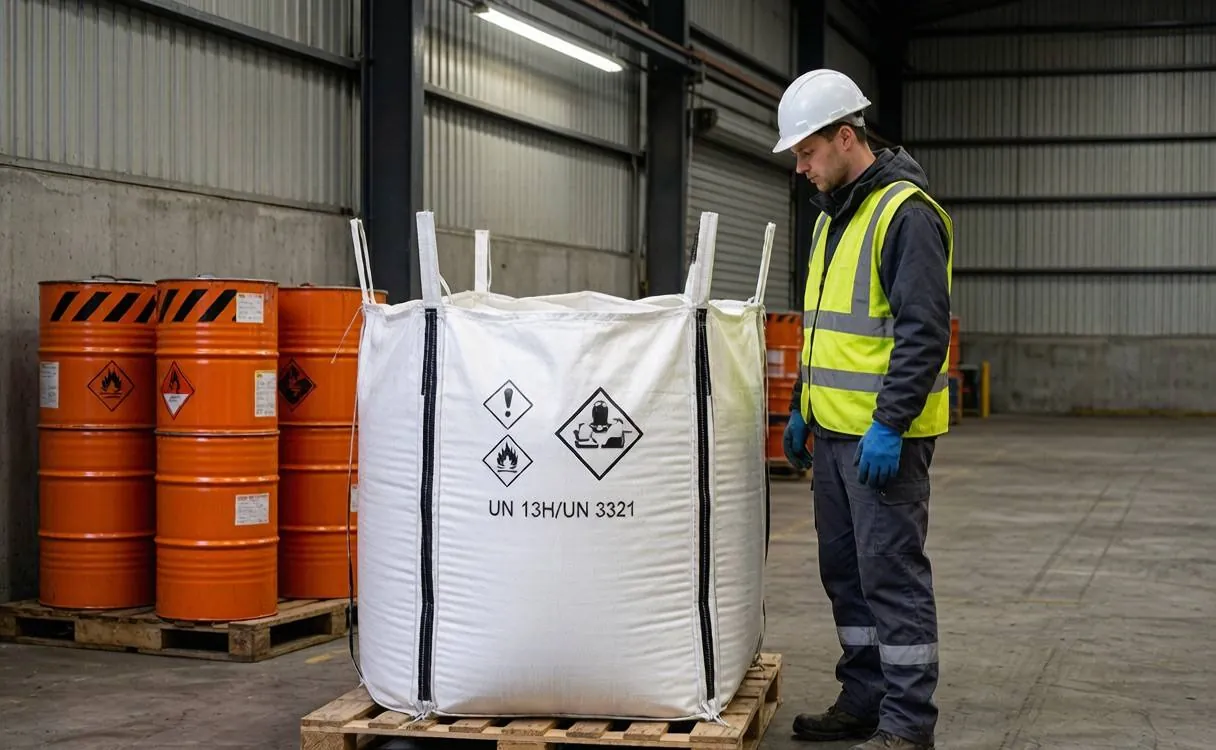
Shipping hazardous solids in bulk demands more than a strong bag. It requires a packaging system that has been tested, certified and correctly marked for the specific dangerous goods you are moving. Here is how to specify UN hazardous goods FIBCs with confidence.
Start with the packing group
The UN packing group (I, II or III) reflects the hazard level of your substance. It determines the performance test level required for the FIBC: X for high hazard, Y for medium, Z for low. A mismatch here is the most common reason for customs rejection.
Type C vs Type D for hazardous goods
| Scenario | Recommended FIBC |
|---|---|
| Flammable dust or vapour, reliable grounding | Type C with grounding tag |
| Flammable dust or vapour, no guaranteed ground | Type D static-dissipative |
| Inert hazardous solids (no flammable atmosphere) | Type A or B UN-certified |
Documentation that travels with the load
- UN marking printed legibly on the bag.
- Test report and certificate from a recognised lab.
- Batch traceability linking fabric, loops and liner to the test.
Our technical team can translate your SDS and transport mode into a UN specification that clears customs and keeps your operation safe.